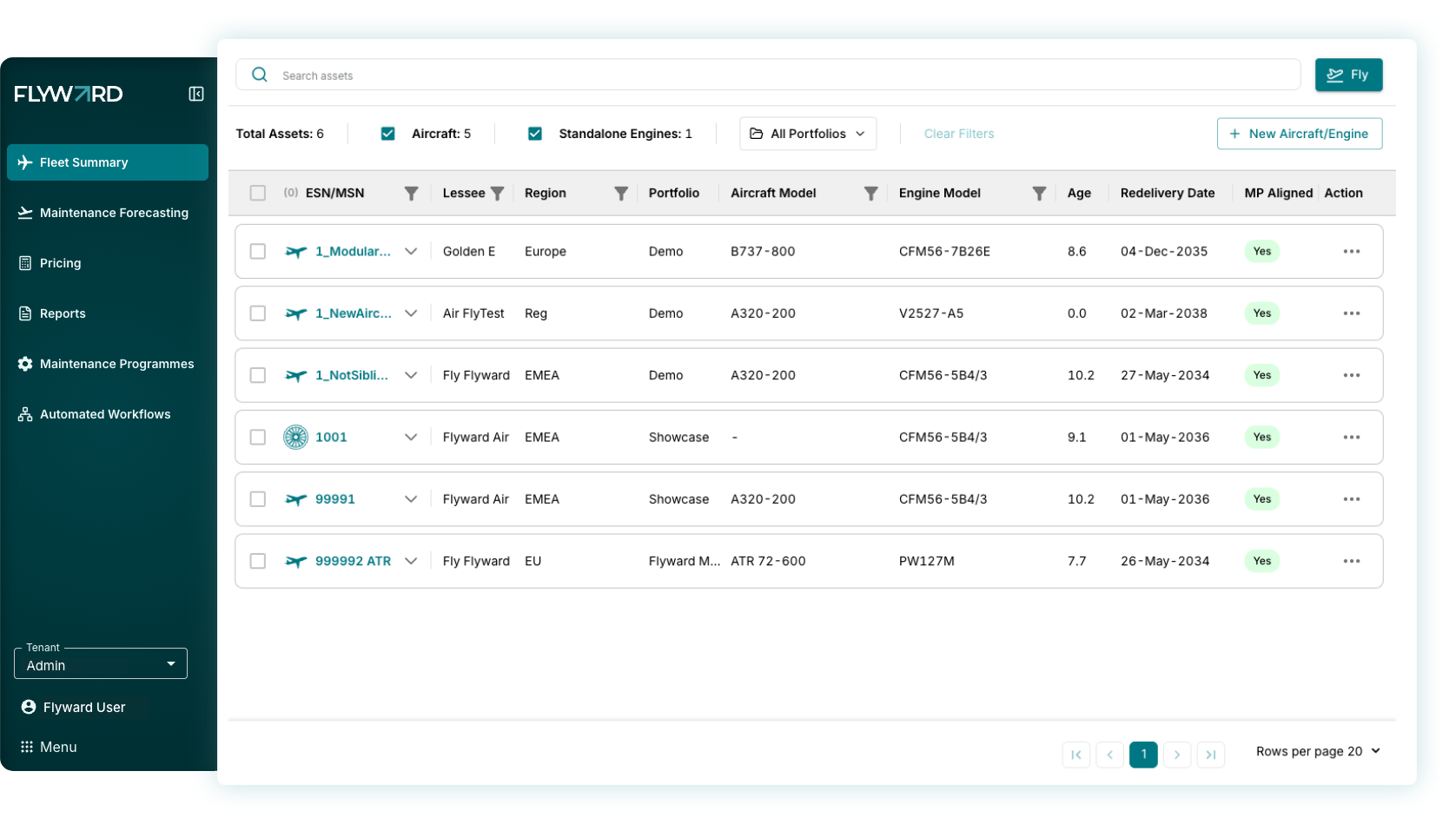
View the most important asset information in one place, including aircraft and standalone engine data, maintenance programme status, and portfolio-level visibility. All designed to simplify fleet analysis and day-to-day management.
Create maintenance forecasts using current contractual data and knowledge base assumptions, fully customizable with:
Custom date or re-delivery date
Build goal
Monthly utilization hours and cycles
Maintenance Reserve Rates
and more…
Quickly run multiple scenarios for the same aircraft (or standalone engines) at once by customizing the contractual terms and knowledge base assumptions.
Analyse a portfolio of assets in bulk by quickly selecting them from the fleet summary, or switch to Asset Analysis to compare two scenarios side-by-side.
Full Control Over Your Maintenance Forecast
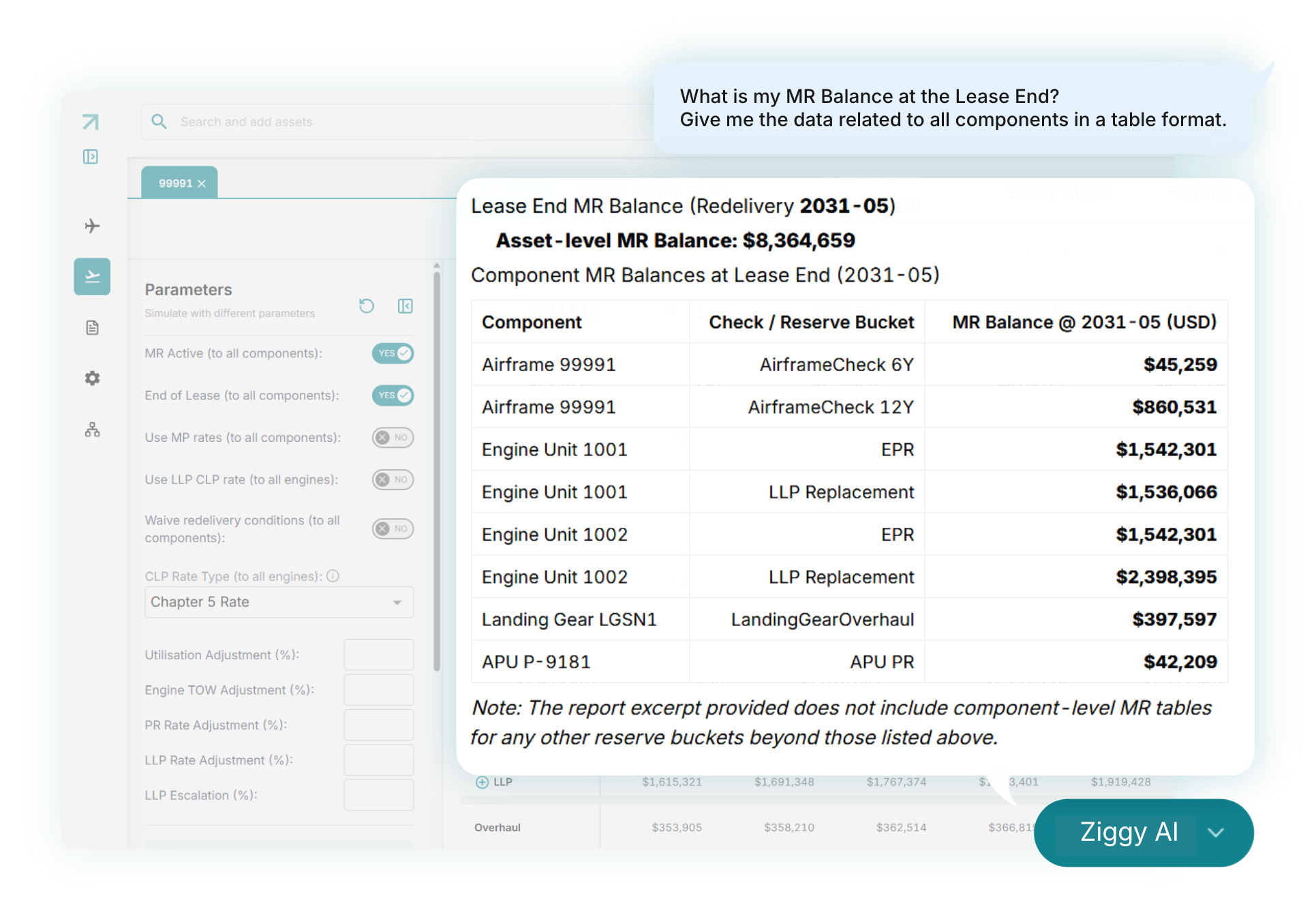
Flyward’s new Ziggy AI helps you understand and explain any scenario, no advanced technical knowledge required. Simply ask for any specific data from the report, reformat the information you need, or get suggestions on how to optimise your forecasting.

Upload tech specs of lease summaries and let Flyward’s AI engine extract and structure the relevant data automatically, or align maintenance programmes and assets with the help of AI.
Generate detailed reports tailored to specific requirements, including maintenance events, financial forecasts, and asset utilization.
Excel Import and Export:
Seamlessly integrate data from your existing systems and export reports for further analysis or sharing with stakeholders.
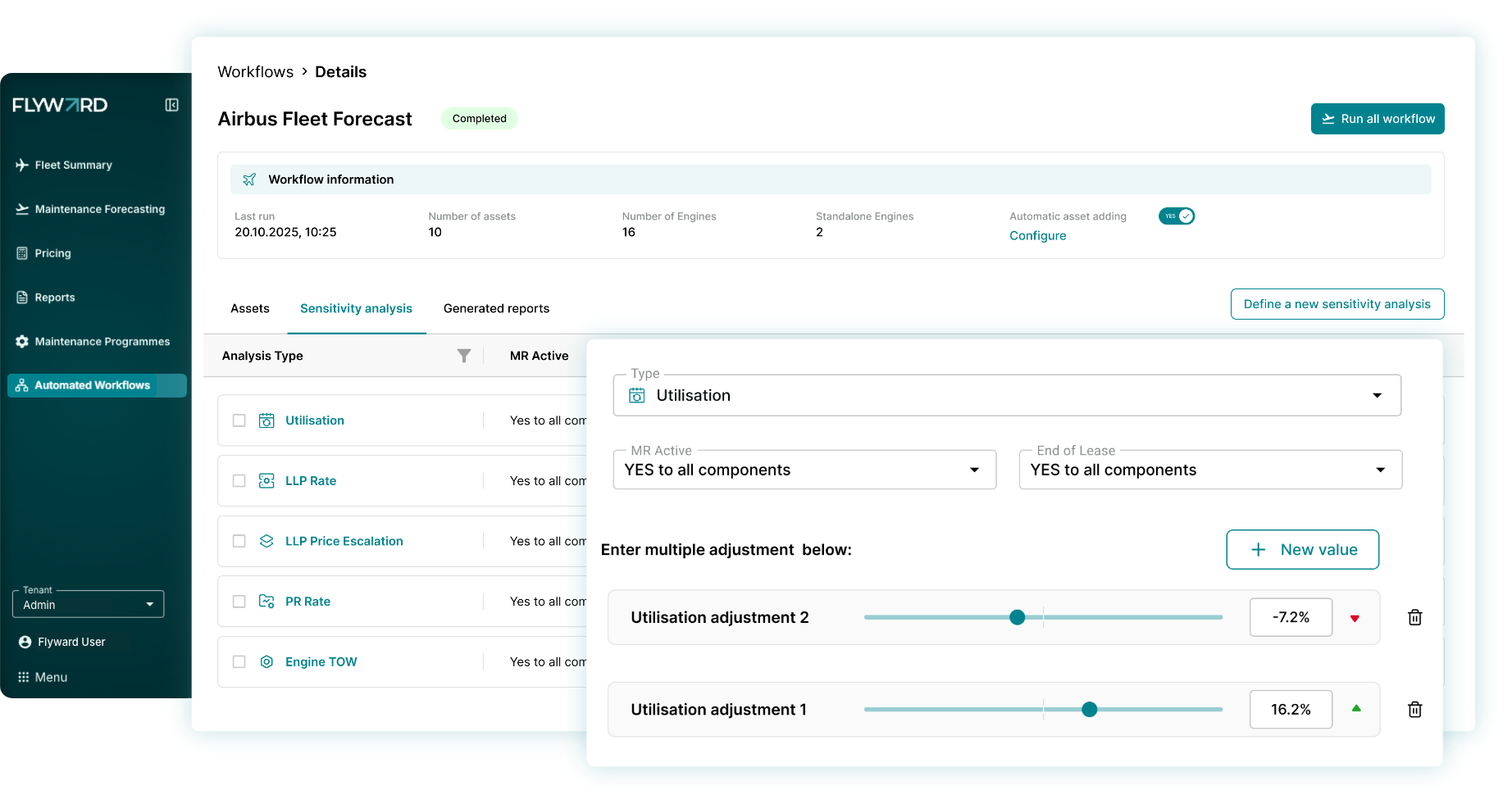
Define a workflow once and apply it across aligned assets in a single click, always using the latest asset details to keep your forecasts current and consistent.
Automated Workflows also support asset-level sensitivity analysis, allowing teams to model key drivers such as utilisation, time-on-wing, and escalations.
Lessor contributions are a key factor in the successful re-leasing of second-hand aircraft. Calculate and manage contributions with unmatched flexibility, ensuring smooth and transparent negotiations.
Integrate Letters of Credit into your maintenance forecasting scenarios and model cash and non-cash structures while analyzing the impact on reserve balances, shortfall exposure, and overall transaction economics.
Incorporate DAC structures into maintenance cash flow analysis, providing clearer visibility into asset economics and transaction performance over the lease lifecycle.